
Flora and Fauna
around Manvers Lake
In addition to its recreational offerings, Manvers Lake is a haven for nature lovers. The parkland and the lake itself support a diverse array of wildlife, making it a great place for birdwatching and nature photography.
Throughout the year, visitors can witness the changing seasons reflected in the flora and fauna, each visit offering a new and delightful experience.
Manvers Lake forms part of the nationally important Dearne Valley Wetlands SSSI, recognised for its exceptional birdlife and diverse wetland habitats. This designation highlights the area’s role in supporting breeding and migratory species such as bittern, gadwall, garganey, pochard, shoveler and black‑headed gull, along with iconic waders including lapwing, redshank and avocet. The site is also a vital stronghold for the willow tit — the UK’s most threatened resident bird — thanks to the rich scrub and wetland mosaic that has developed across the valley.
All of the photos shown are taken by our Photography section of the Manvers Waterfront Boat Club or by visitors to the lake who have uploaded them to our Manvers Lake Photography facebook group.


Mute Swan
The Mute Swan is one of the most recognisable and graceful waterbirds. Despite its name, it isn’t truly mute - just quieter than other swan species. Easily identified by its all‑white plumage and reddish‑orange bill with a black knob, it is also one of the heaviest flying birds. Often viewed as romantic, pairs are known for forming a heart shape with their curved necks. Mute swans mainly feed on aquatic plants, especially waterweed, and usually mate for life, though some may have multiple partners. Mute swans need a long run across the water to take off, and their wings produce a noticeable whirring sound in flight. Although elegant, they can be territorial - chasing away intruders during the breeding season. They build large waterside nests, typically laying 5–7 eggs. Cygnets are fluffy and brown and sometimes ride on their parents’ backs for warmth and safety. For many years, two swans affectionately known by locals as Doris and Derrick lived on our lake. Derrick was a large, dominant swan who fiercely protected his territory and would chase off any other swans that ventured too close. Throughout their time here, the pair successfully raised many cygnets. They became well accustomed to the club’s open-water swimmers and would often waddle over looking for food, or simply glide past as people swam. Sadly, Derrick passed away in 2024, and since then we’ve begun to see many more swans taking up residence on the lake.


Black Swan
A Black Swan is one of the most striking waterbirds you’re ever likely to see, instantly recognisable by its deep jet black plumage, brilliant red bill, and the flash of white that appears in its wings when it takes off. Native to Australia, these impressive birds are similar in size to the UK’s Mute Swans and can reach wingspans of around two metres. Their behaviour is just as distinctive as their appearance — instead of the quieter grunts of our native swans, Black Swans often make soft, musical bugling or whistling calls, and when feeding they can be seen tipping forward with their tail in the air while reaching down for aquatic plants with their long necks. Although they look wonderfully exotic gliding across a British lake, Black Swans aren’t native to the UK. Those that appear here are typically escapees or descendants of ornamental birds introduced to estates as early as the late 1700s. Sightings in the wild remain unusual, which is why the Black Swan that visits Manvers Lake has become such a local favourite. This individual isn’t a permanent resident, but it has been spotted returning for several weeks at a time over the past few years, delighting visitors each time it reappears. When it takes flight, the sudden flash of white against the black feathers is especially dramatic. Black Swans can live for decades and often form long term pair bonds, so if this visitor continues to find good feeding and a peaceful environment, we may be lucky enough to welcome it back for many years to come.


Great Crested Grebe
The Great Crested Grebe is a delightful and elegant waterbird, easily recognised by its decorative head plumes. During the breeding season, it displays an impressive head crest and a striking orange ruff around its neck. The species has white cheeks, a dark cap, a white neck, and a dark body. Great crested grebes mainly eat fish, which they catch by diving underwater. They are excellent swimmers and often use diving as a way to escape danger. They build floating nests among reeds at the water’s edge and typically lay around 3–5 eggs. Young chicks are often seen riding on their parents’ backs. The species is especially well known for its elaborate spring courtship display, during which pairs perform synchronised movements, rise upright from the water, and shake their heads while fanning out their decorative feathers. Stand‑up paddleboarders at Manvers Waterfront Boat Club often have one of the best views of Great Crested Grebes in action. These elegant birds are expert divers, using their powerful legs and streamlined bodies to chase fish underwater. From a paddleboard, you might see one shoot past beneath the surface like a feathered torpedo, gliding silently through the water before popping up several metres away with barely a ripple. Great Crested Grebes are wonderfully agile and can stay underwater for surprisingly long periods, which makes each sighting feel like a little moment of magic. If you’re out on a paddleboard, keep an eye on the water - you might spot one zooming around like an underwater rocket and suddenly reappearing somewhere completely unexpected. It’s like nature’s own game of peek‑a‑boo, and for many paddleboarders, it’s one of the highlights of being out on the lake.
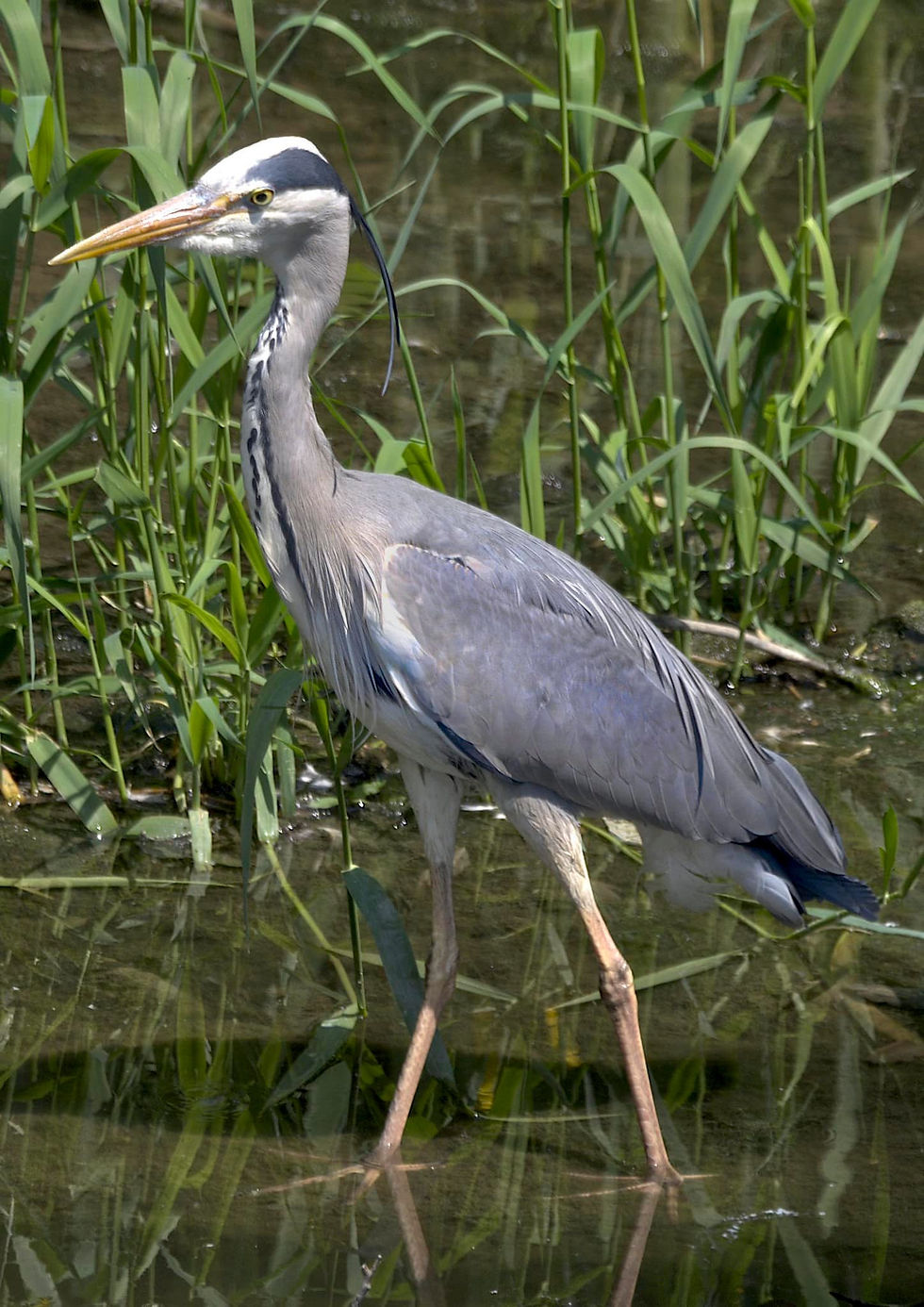


Grey Heron
Grey herons are unmistakable, tall, prehistoric-looking birds with long legs, pointed beaks, and grey, black, and white feathers. They can often be spotted standing like statues at the edges of ponds and lakes, patiently watching the water as they wait for their next meal. They inhabit rivers, lakes, ponds, marshes, and estuaries, and mainly hunt fish, though they will also eat amphibians, small mammals, and insects. Grey herons nest in colonies called heronries, often in trees near water, where they lay 3–5 pale blue eggs. The chicks usually fledge after about 7–8 weeks. While they tend to hunt alone, they are social during the breeding season and are strong fliers, travelling with their necks folded back in flight.


Common Kingfisher
The Common Kingfisher is one of the most dazzling birds seen along rivers and streams, often appearing as a sudden flash of electric blue and bright orange as it darts over the water. With its metallic-blue back, coppery-orange underside, white neck patch, and long dagger-like bill, this small bird is both beautiful and perfectly designed for hunting. Despite its size, the kingfisher is a fearless predator. It waits patiently on a low branch above the water before plunging headfirst at lightning speed to catch a fish - sometimes even one larger than itself. The dive is incredibly precise, and in seconds the bird returns to its perch with its catch. These birds live close to rivers, ponds, and streams, where they dig tunnel-like nests into sandy banks. Both parents work together to raise their chicks, feeding them fish until they are ready to fly and even making their first daring dives soon after leaving the nest.

Garganey
The garganey is a true globetrotter of the duck world, travelling vast distances between its European breeding grounds and its wintering sites in Africa and Asia. This small, secretive dabbling duck is the only duck species that breeds in Europe yet winters entirely in Africa and Asia, making its migrations particularly remarkable. Pairs form either on the wintering grounds or during spring migration, and breeding takes place from April to July, peaking in May and June, when males perform elaborate courtship displays such as head bobbing and wing lifting. In the UK, the garganey is considered scarce and elusive, with only around 100–120 breeding pairs, mostly in central, southern and eastern England. Seen in its striking breeding plumage, this Amber listed species is a special sight, spending summers tucked away in shallow wetlands before returning to Africa for winter. The photo featured here was taken in April 2024, when excitement rippled through the birding community and twitchers with long lens cameras appeared in numbers, all hoping to catch a glimpse of this rare and beautiful visitor.
Flora


Pochard
The pochard is a once common diving duck now in steep decline across Europe. The UK is vital for its survival, providing a winter refuge for around 48,000 birds arriving from northern and eastern Europe, though only a few pairs remain to breed, making nesting pochards increasingly rare. A specialist of deeper water, the pochard dives for plant seeds, waterweed, snails and aquatic invertebrates, rather than dabbling at the surface. Its reliance on healthy wetlands has contributed to its decline, and it is now Red listed in the UK and Vulnerable globally. In full breeding plumage, males are striking with a chestnut red head, black breast, and pale grey body, while females are softer brown grey with pale cheeks. After breeding, males moult into their dull eclipse plumage, closely resembling females to avoid predators - a common strategy among ducks.